
Compact Track Loader vs Skid Steer: Tracks or Wheels

Key takeaways
Start the compact track loader vs skid steer question with the ground: tracks suit soft, wet, or sloped sites, and wheels suit hard, flat surfaces, where tires also wear more slowly than tracks do.
- Compare capacity figures at the same percentage of tipping load.
- On two Cat sheets, the track loader’s smaller headline figure turns into the larger one.
- Ground pressure: 6.1 psi on narrow tracks, 4.9 on wide ones.
- Pavement is where tires earn their keep.
Cat printed both of these sheets in August 2019, and a compact track loader vs skid steer shopper who reads only the top capacity line will crown the wrong machine. The 262D3, on tires, shows 2,700 lb of rated operating capacity. The 259D3, on rubber tracks, shows 2,010 lb first.
Same C3.3B diesel. Same 66 inches.
Look under that 2,010. Cat labels it 35% of tipping load, and the very next line on the page reads 2,870 lb at 50%, which is the same half that the 262D3’s 2,700 lb happens to be of its 5,400 lb tipping load.
A disclosure. Paramount Financial’s business is equipment financing, so test our figures against Cat’s, and see compact track loader financing for the money side.
Compact Track Loader and Skid Steer, Defined
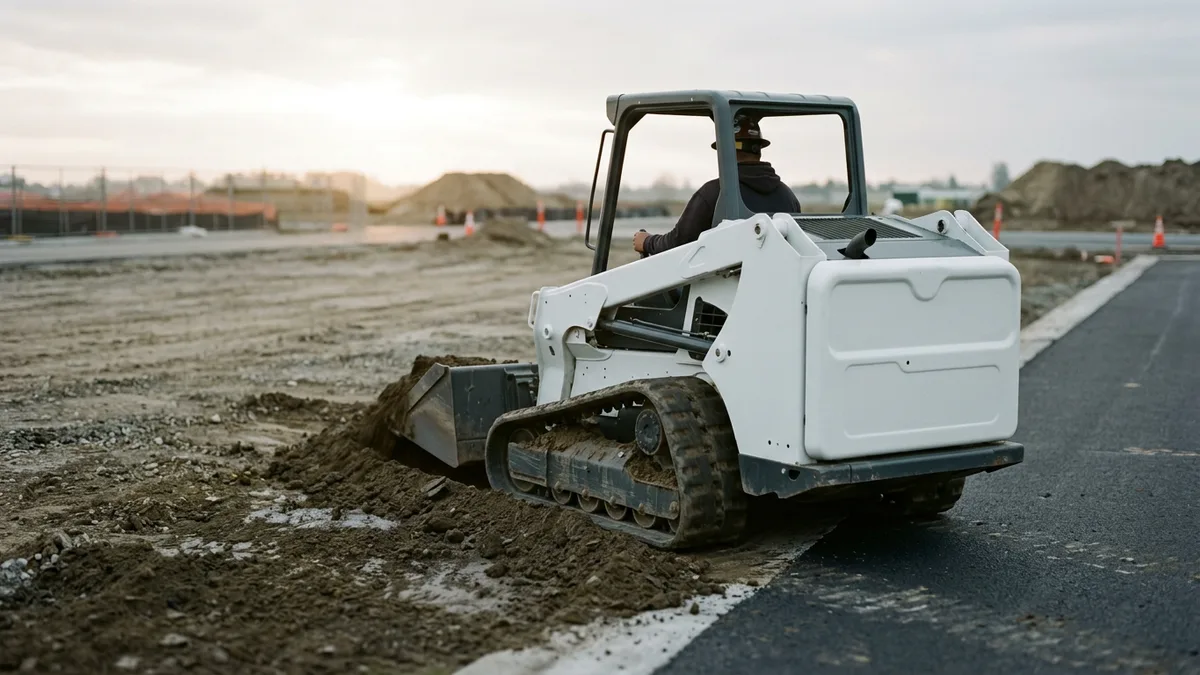
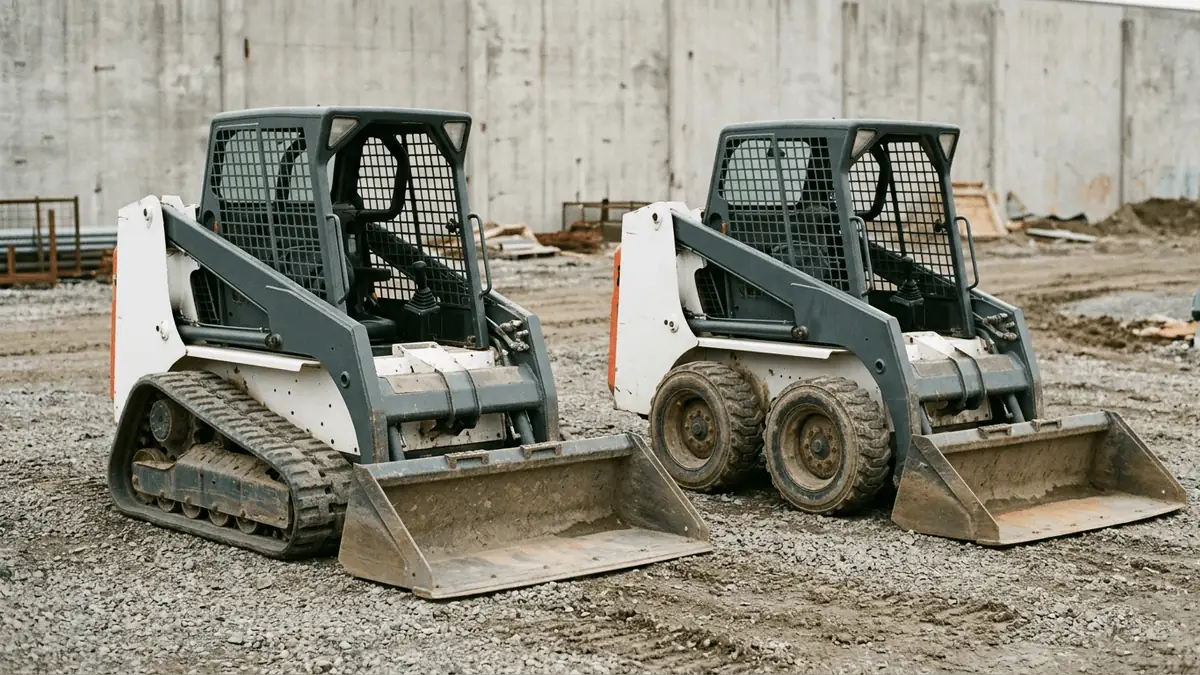
A skid steer has a rigid frame and four tires, and it steers by running the left pair and the right pair at different speeds, scrubbing rubber on every turn. A CTL (compact track loader) puts a similar cab and lift arms on two rubber tracks instead, and the longer footprint carries its weight over more dirt.
For a fair test, hold the engine and the frame style still. Cat gives each D3 74.3 gross horsepower, vertical lift arms, and a 66-inch width on standard rubber. What differs is mostly underneath. Mostly.
Read the Percentage Before the Pounds
Rated operating capacity is a share of tipping load, the weight that would start to tip the machine. Makers don’t use one share. Kubota’s SSV skid steer series page labels its figure 50% tipping load, and its SVL track loader series page labels its figure 35% tipping load. Two labels, two meanings.
2,010 lb
Cat 259D3 capacity at 35% of tipping load. The same sheet prints 2,870 lb at 50%.
Source: Cat, 259D3 Compact Track Loader specifications, 2019
Put the pair on one basis and the order flips. The table uses Cat’s 262D3 skid steer sheet and its 259D3 track loader sheet, both dated August 2019. Shopping a newer model? Pull its own sheet.
| 262D3 skid steer | 259D3 track loader | |
|---|---|---|
| Operating weight | 8,296 lb | 8,987 lb |
| Tipping load | 5,400 lb | 5,745 lb |
| Capacity at 50% | 2,700 lb | 2,870 lb |
| Capacity at 35% | 1,890 lb, our math | 2,010 lb |
| Standard width | 66 in | 66 in |
| Two-speed travel | 11.0 mph, option | 8.5 mph |
| High flow | 32 gpm | 30 gpm |
| Tilt breakout force | 7,355 lb | 4,965 lb |
| Ground pressure | Not printed | 6.1 psi |
Figure the 262D3 at 35% and you get 1,890 lb, which sits under the 259D3’s 2,010, and at 50% the order is the same, 2,700 against 2,870, so the loader with the smaller headline figure has the larger capacity on either basis. The margin is modest. About 6% more tipping load, for 691 lb more machine.
Treat our 1,890 as arithmetic, not a rating. Load by the figures on the machine you run. SAE’s J818 loader rating standard says it takes only hydraulic lift capacity and tipping capacity into consideration, and that specific conditions may allow larger loads or require smaller ones. Ask every quote which share it used.
Ground Pressure and Where Each Loader Works
Ground pressure is how hard each square inch of contact pushes down. On 12.6-inch tracks the 259D3 touches 1,483 square inches and presses 6.1 psi. Order the 15.7-inch tracks and the sheet shows 1,848 square inches, 4.9 psi, and a width of 69 inches instead of 66, so a lawn gets a lighter footprint and the same loader might no longer fit the side gate. Measure the gate first.
The 262D3 sheet has no such line, though Cat configures the machine on 12 x 16.5 tires. Want a figure? Ask the dealer for the one on your tire.
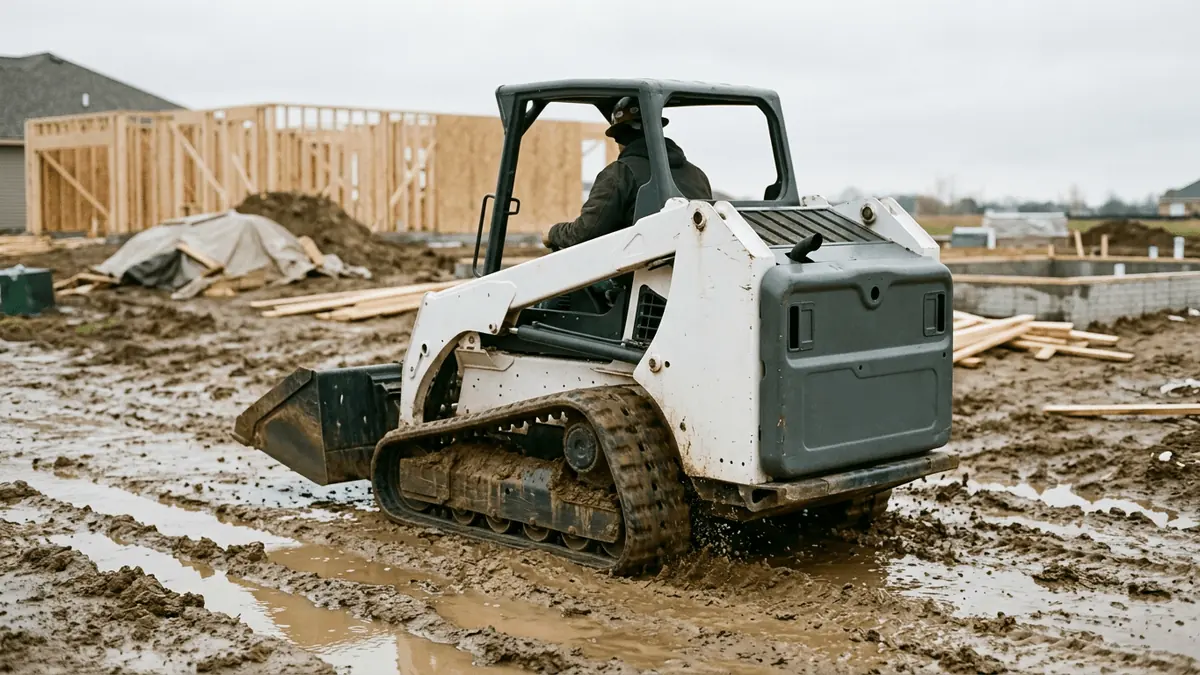
Bobcat’s January 2026 buyer’s guide, written for its European market, puts compact track loaders on soft, muddy, sandy, or snowy terrain, on uneven or sloped sites, and on turf or soft soil where you want little disturbance.
Its list for skid steers reads differently. Roads, concrete, and gravel. Tight turns. Frequent moves with lighter loads.
Tracks, Tires, and the Wear Bill
Score one for tires. Bobcat’s list puts a lower purchase price and lower maintenance costs on the skid steer side, along with the note that tires wear more slowly than tracks on abrasive or paved surfaces.
Under a CTL there’s rubber, plus rollers, idlers, and drive sprockets, and every one of those can be the part a used seller hasn’t replaced yet. Look early.
For list prices, used asking prices, and attachments, see what a skid steer costs, which covers wheeled and track models. Get two numbers anyway. A replacement set of tracks, installed, and a set of tires, installed.
Compact Track Loader vs Skid Steer by Job
- Finished lawns and landscaping installs, where a rut means a callback, lean toward tracks.
- Spring site prep after a thaw? Tracks.
- Slopes and forestry work, which Bobcat lists under track loaders.
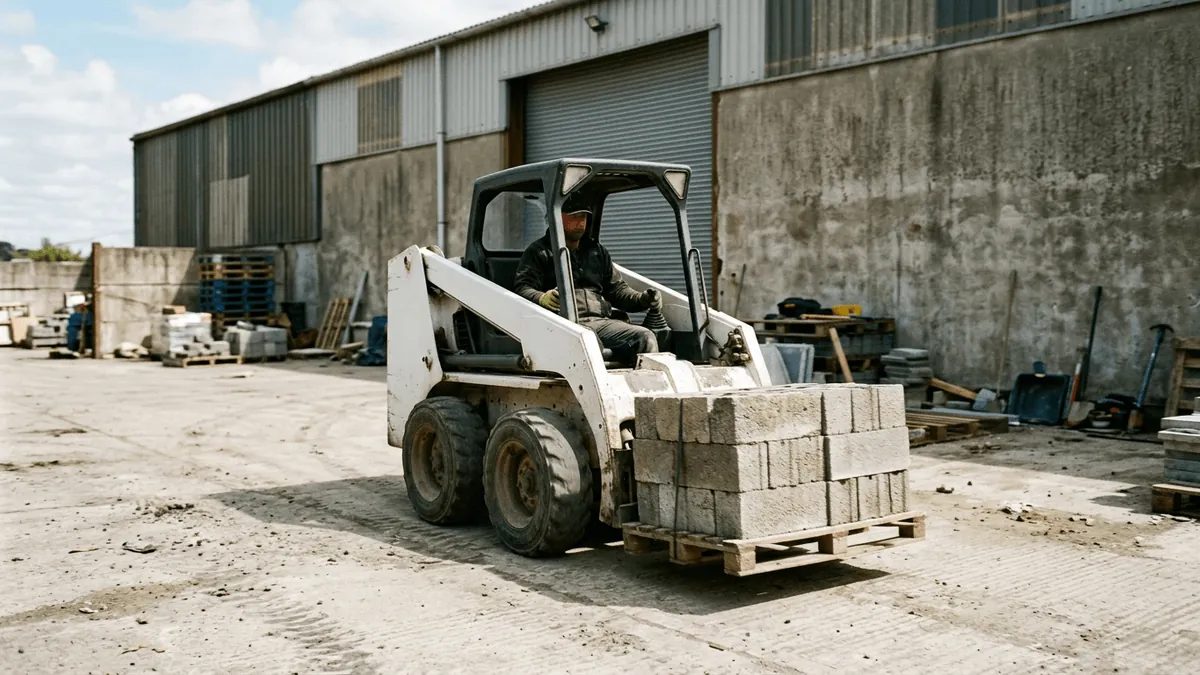
- Paved yards, block delivery, and cleanup on concrete go to wheels, where tires hold up longer.
- Long moves across a firm lot: the skid steer’s sheet prints 11.0 mph with the two-speed option, against 8.5 for the track loader.
Buying a mulcher or a cold planer? Start with the gallons the tool wants. These sheets give the 262D3 32 gpm on high flow and 23 on standard, while the 259D3 gets 30 and 20.
Close. Not equal.
Long hauls all day? Our wheel loader vs skid steer guide covers that choice and OSHA’s earthmoving rule. For digging below grade, see mini excavator vs skid steer.
Questions to Put to the Dealer in Writing
- Which percentage of tipping load is the capacity on this quote?
- What’s the ground pressure on these exact tires or tracks?
- How wide is it over them, with the bucket on?
- What does a replacement set cost, installed?
- Is high flow on this unit, or only on the spec sheet?
- Hours, service file, and on a CTL, the undercarriage records.
Tracks or Wheels: Questions From Contractors
So which one is the better buy, tracks or wheels?
Neither, until you know the ground. Mud and slopes pull toward tracks, a paved yard pulls toward wheels, and a crew that splits its weeks between them might own one and rent the other.
Why does a track loader’s capacity look smaller on paper?
Mostly the percentage. Kubota’s wheeled series page says 50% of tipping load and its track series page says 35%, so a single loader would print two numbers, one on each basis. Compare like with like.
Should a compact track loader spend its days on pavement?
Not if you can help it. Bobcat’s guide lists abrasive and paved surfaces under the skid steer because tires wear more slowly than tracks there. If pavement is most of your week, price wheels seriously.
Do wider tracks change much?
Wider tracks lower ground pressure and cost you width. On Cat’s 259D3 sheet, moving to 15.7-inch tracks drops pressure from 6.1 to 4.9 psi and adds three inches overall.
Which of these two loaders digs harder?
On these two sheets, the skid steer does. Its tilt breakout force prints at 7,355 lb against 4,965 lb. Breakout is a digging figure, though, and says nothing about what you can safely lift.
Is renting a fair way to settle it?
It can be. Rent the undercarriage you’re leaning toward for a stretch that includes your worst ground, then look at the ruts, the traction, and the clock. Short test. Real answer.
Next Steps
Not every loader needs a loan. A machine that runs a few jobs a year can be a rental, and a business holding spare cash might simply buy it.
If financing fits, compare skid steer financing with the track loader page linked above, and read used equipment financing if the machine has hours on it. Picked an undercarriage? You can start an application with the exact unit in mind.