
Last updated: November 27, 2026
EV Charger Financing for Businesses and Fleet Depots
Level 2 and DC fast chargers, the electrical work behind them, and who owns each.
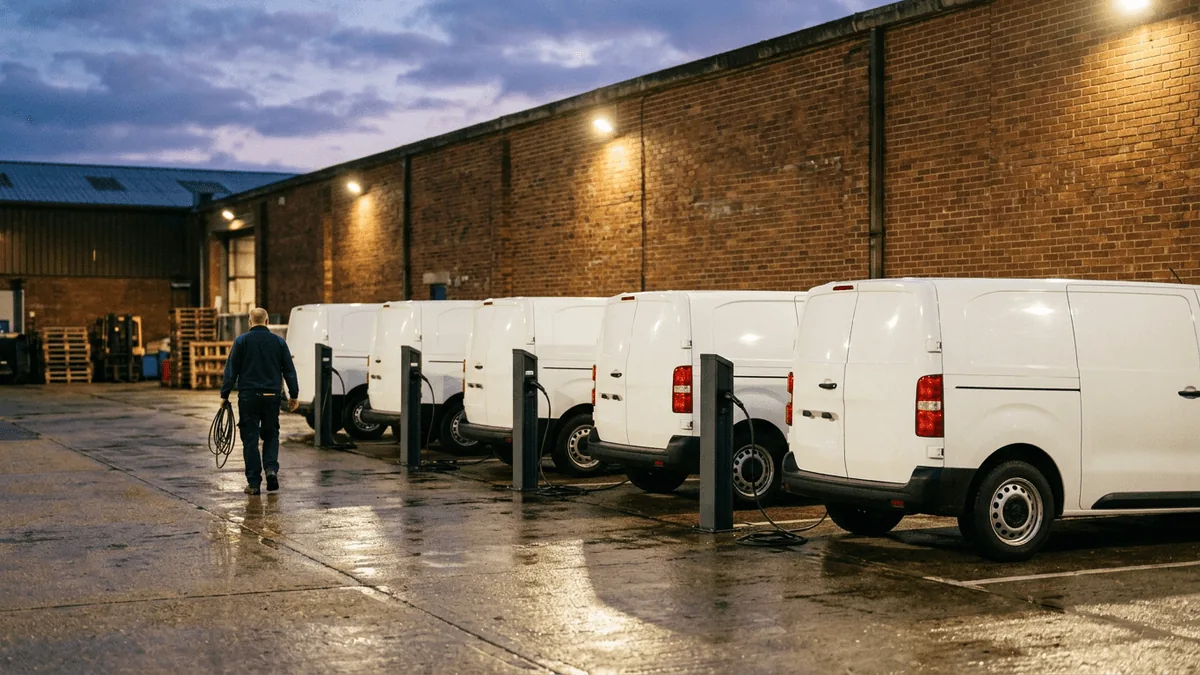
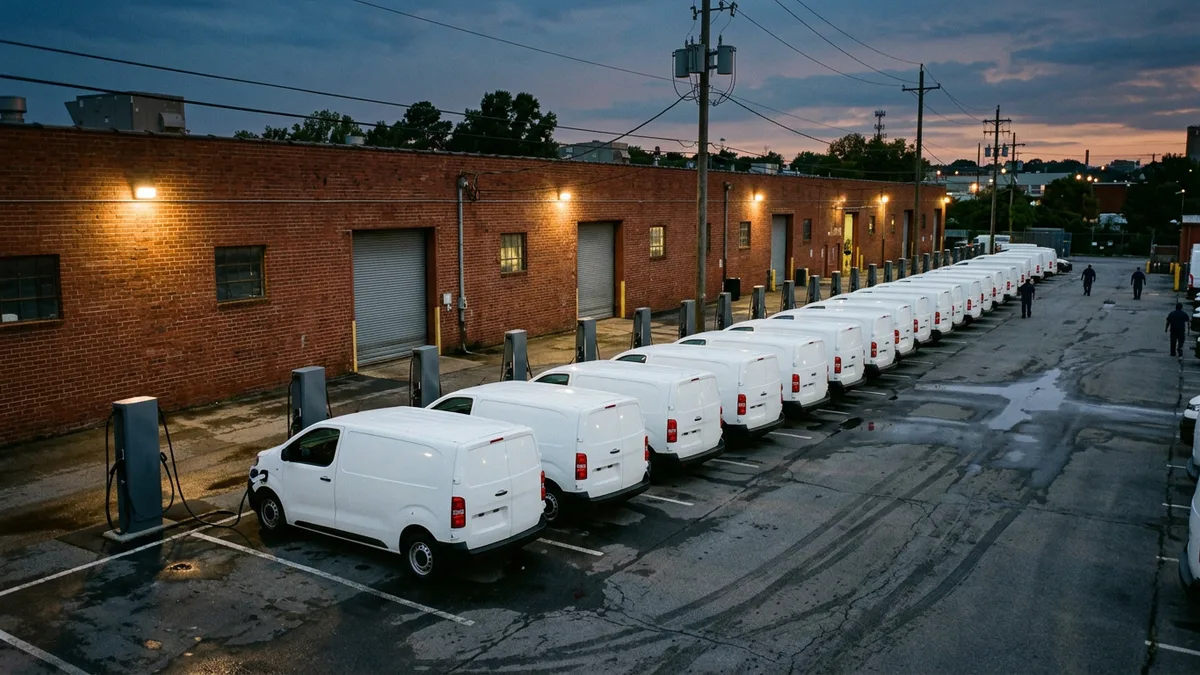
EV charger financing spreads the cost of commercial chargers, and sometimes their installation, over a loan or lease term, so a business or fleet depot can plug in vehicles while it pays for the equipment.
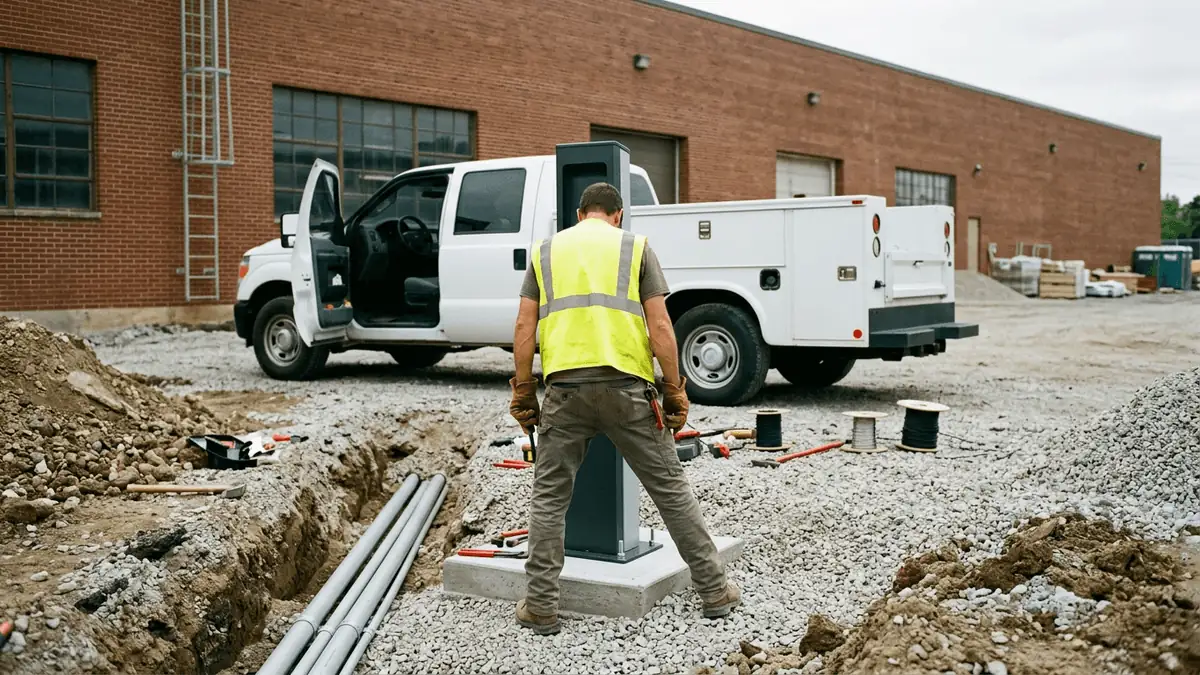
Say a courier firm in Mesa wants eight vans plugging in by spring. Eight chargers sound like the whole order. Then the electrician finds a full panel, a trench across the loading apron and a utility that wants to study the load first.
Money questions start there. Our commercial equipment financing guide has the wider picture. Paramount Financial offers true leases as well as loans, which matters for gear you might hand back.
What EV charger financing has to cover
Put simply, EV charger financing pays for charging equipment over a set term through a loan, an equipment finance agreement or a lease, and it sometimes carries part of the install. Loan or agreement? You own the chargers, and the lender holds a security interest. With a true lease, the lessor owns them.
Get two prices from your installer.
Hardware with serial numbers
Site work, soft costs and services
The Energy Department’s Alternative Fuels Data Center says labor is the largest expense in a typical installation, and DOE notes that soft costs such as permitting and utility interconnection can often take a larger share than direct costs. Labor doesn’t resell.
Follow the wire from the transformer to the plug
An electrician draws this as a one-line diagram: one wire, and every box it passes through. Start at the street. Find the meter. Light blue is the utility’s side and navy is yours.
Utility transformer
Utility side. Capacity studies, new service and transformer swaps start here.
Utility meter
The line. PG&E and SDG&E describe their options as ahead of it or behind it.
Switchgear and panel
Your side. Breakers, gear and, on some sites, a step-down transformer.
Trench and pad
Site work. Concrete and conduit stay behind when a charger is swapped.
Charger
Equipment. Unbolts. Carries a serial number. Goes on a schedule.
Utilities publish their own versions. PG&E’s EV Fleet FAQ lets a customer either build and own the work behind the meter, or have PG&E own everything from the transformer to the charger, and it asks participants to keep operating and maintaining the chargers on a ten-year commitment. SDG&E’s Power Your Drive for Fleets offers a similar choice for medium and heavy-duty vehicles.
Compare that commitment with your lease term before you sign either one.
Level 2 or DC fast: size the charger to the parking time
Start with the clock. Vans that park at six in the evening and pull out at six in the morning give you twelve hours to fill them, while a shuttle looping a hotel and an airport gives you whatever is left between two runs. Those two lots shouldn’t buy the same hardware.
AFDC’s range figures are approximations. Expect a loaded cargo van to get fewer miles from each hour on the plug. DC fast units can also trigger utility demand charges, which AFDC lists among operating costs. Budget those.
Buying the vans in the same year? Our commercial vehicle financing page covers that side, and generator financing covers backup power for a depot that can’t miss a morning. Still weighing the vans themselves? Compare leasing and buying fleet vehicles first.
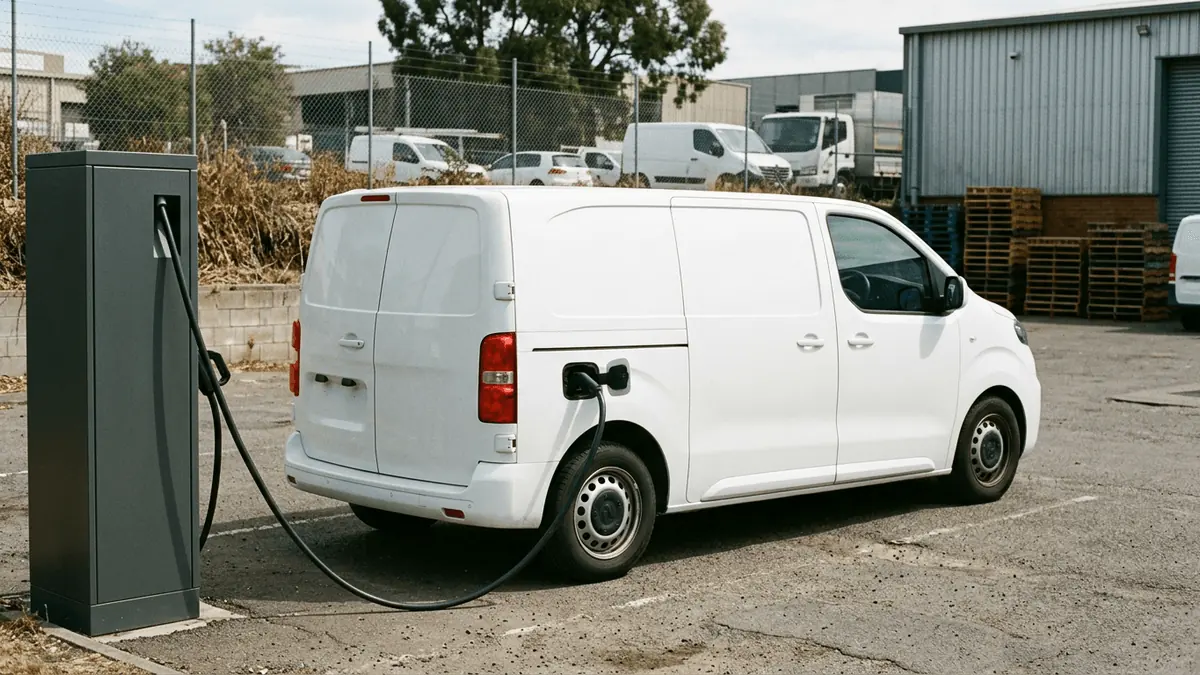
Level 2 and DC fast chargers side by side
| What to compare | AC Level 2 | DC fast |
|---|---|---|
| Power output | 2.9 to 19.2 kW | Up to 500 kW |
| Electrical supply | 208 V commercial or 240 V | Usually three-phase AC input |
| Range added | About 25 miles per hour | About 100 to 200+ miles per half hour |
| Connectors | J1772 or J3400 | CCS, CHAdeMO or J3400 |
| Public equipment, per connector | About $3,500 | $38,000 to $90,000 |
| Installation, per connector | About $2,500 | $20,000 to $60,000 |
Specs come from the AFDC’s charging station page. Costs come from its infrastructure development page, and both were read in November 2026. The equipment row traces to National Laboratory of the Rockies and Idaho National Laboratory research on public chargers, and both cost rows move with power rating, site conditions and how many units go in together. Sanity check only.
Who owns the charger when the term ends
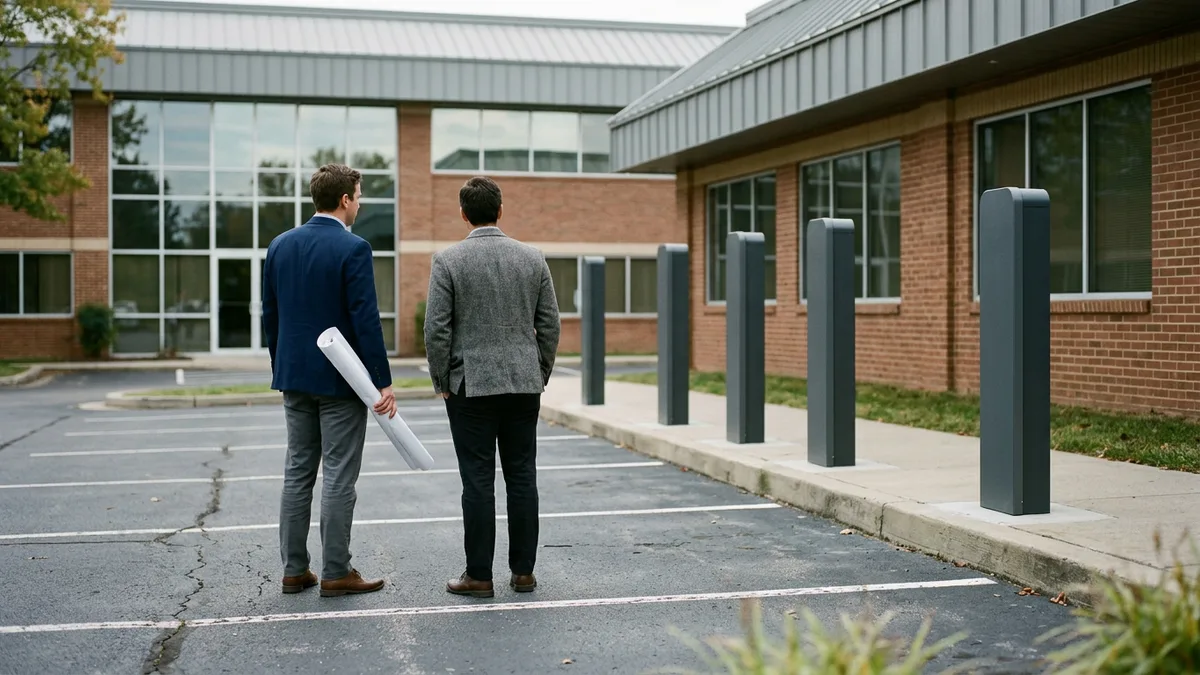
Returning a charger isn’t like returning a copier. Somebody has to disconnect it, unbolt it, ship it and make the pad safe. Who? Get that answer in writing.
Chargers on property you rent
Bolted to a pad and wired into a building, a charger can be treated as a fixture, so real estate law gets a say. A lender may record a fixture UCC filing under UCC 9-334, while a lessor gets priority under UCC 2A-309 when the owner has consented in writing or the tenant has a right to remove the equipment.
The federal credit and utility programs, as published
Short version first. The IRS instructions for Form 8911 say Section 30C can’t be claimed for charging property placed in service after June 30, 2026.
For business property in service from 2023 through that date, the IRS credit page describes 6% of cost, or 30% where prevailing wage and apprenticeship rules were met, capped per item and limited to eligible census tracts. Installed before the cutoff? Consult your tax advisor before you file for 2026. Our guide to the tax treatment of leased equipment covers the wider questions.
Station rules and rebate dates
Three numbers to check before you order
40 to 80 A
The amperage AFDC gives for public and workplace Level 2 equipment
150 kW
Minimum for each DC fast port at NEVI-funded stations serving highway corridors
Source: 23 CFR 680.106, Cornell LII
6 months
The low end for DC fast interconnection, which can run past two years
Source: U.S. Department of Energy
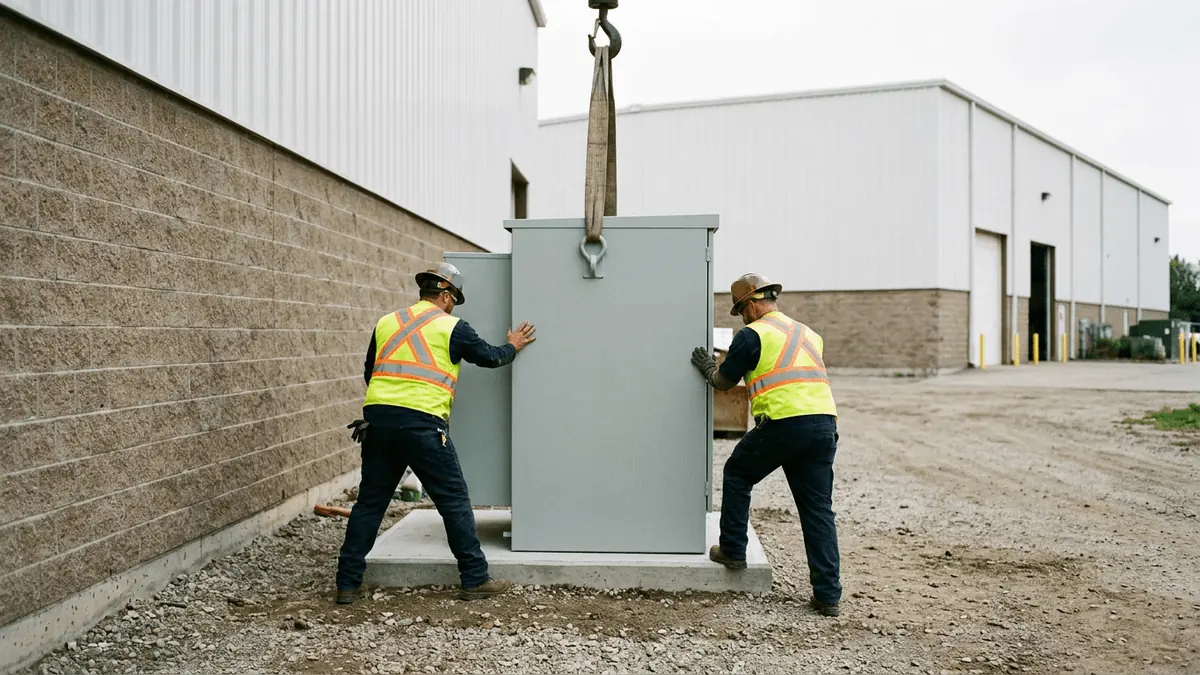
Call the utility before the salesperson. A charger order placed ahead of the power can leave new equipment sitting in its crate for months while the payments on it keep arriving on schedule. Article 625 of the National Electrical Code covers the charger wiring.
What to bring to a charger quote
Business paperwork comes too. Our equipment financing documents checklist covers it, and retail sites adding a screen by the chargers can look at LED sign financing.
EV charger financing questions from fleets and property owners
Can installation and electrical work go on the same agreement as the chargers?
Sometimes, and the invoice decides a lot of it. Hardware, site work and subscriptions should each get their own lines. A lender can picture reselling a charger. Nobody resells a trench.
Is it better to lease or buy commercial EV chargers?
It turns on what you want at the end. A loan suits chargers you expect to leave bolted in one place for a long stretch, while a lease leaves you some room if connector standards, your fleet mix or your street address change before then. Compare total paid. Monthly figures mislead.
How much does a commercial EV charger cost?
AFDC puts public Level 2 equipment near $3,500 per connector and DC fast equipment at $38,000 to $90,000.
Installation adds more. On public and workplace sites it averages about $2,500 per Level 2 connector and runs $20,000 to $60,000 per DC fast connector.
Who owns the charger when the lease ends?
Under a true lease, the lessor owns it unless you buy it. A $1 buyout lease is written so you keep it. A fair market value lease lets you return, renew or buy. Ask who pays for removal.
Is there still a federal tax credit for business EV chargers?
Not for chargers placed in service after June 30, 2026, according to the IRS. Units already running by that date fall under the earlier Section 30C rules, so consult your tax advisor about your 2026 return.
Can a business put chargers on property it rents?
Often it can, if the property owner agrees in writing. Get consent that names the equipment and your right to remove it. Utility programs may want more: SDG&E, for one, asks the landowner to sign an easement for its fleet program.
Pricing a depot or a parking lot?
Tell us where the vehicles park and what you’re installing, or start the credit application.