
Last updated: November 27, 2026
Food Processing Equipment Financing for Meat, Produce and Snack Plants
Compare loans and true leases for grinders, fryers, blast freezers and sanitary conveyors.
Food processing equipment financing pays for grinders, slicers, fryers, blast freezers and conveyors over a set term. With a loan, your plant owns the machine. With a true lease, the lessor owns it during the term.
Say a jerky maker in Tucson needs a second smokehouse, a bigger grinder and a blast chiller before the holiday orders land. Three machines. Three lifespans. Maybe one agreement, maybe three.
This page covers the process side, from prep through chilling, under our guide to equipment financing by industry, while fillers, sealers and labelers belong on our packaging equipment financing page. Paramount Financial offers true leases as well as loans. Questions first? Talk with Paramount Financial’s team.
How food processing equipment financing works
Food processing equipment financing is a loan, equipment finance agreement or lease that pays for production machinery over a set term. With a loan or agreement, your business owns the equipment and the lender holds a security interest. With a true lease, the lessor owns it during the term, then you return, renew or buy.
Quotes come first. Picture the Tucson chiller arriving on a flatbed with its panels, its compressor rack and a separate invoice from the electrician who has to pull a new circuit to it, and you can see why a lender and your accountant both want the machine priced on one line and the building work on another. Line by line. Our equipment financing documents page covers the rest of the paperwork.
What the quote should list
From raw to ready: equipment on each side of the cook step
Walk the floor in the order product does. Beef trim arrives cold, gets ground and seasoned, goes into the smokehouse, and comes out as something that mustn’t touch the raw trim again, so sketch a floor plan beside the quote and mark where each new machine will stand. Fresh-cut salad lines differ. They wash, cut and chill with no cooking at all.
Raw side: prep
The cook step
Ready side: chill and freeze
Belts tie it together. For plants under FDA’s rules, 21 CFR 117.20 names location, time, partitions, air flow and enclosed systems as ways to separate operations where contamination is likely, so give any conveyor that crosses from one zone into the next a hard look before you order it. Trace every crossing. Cartons, film and case packing start where this belt stops.
Sanitation rules your equipment has to meet
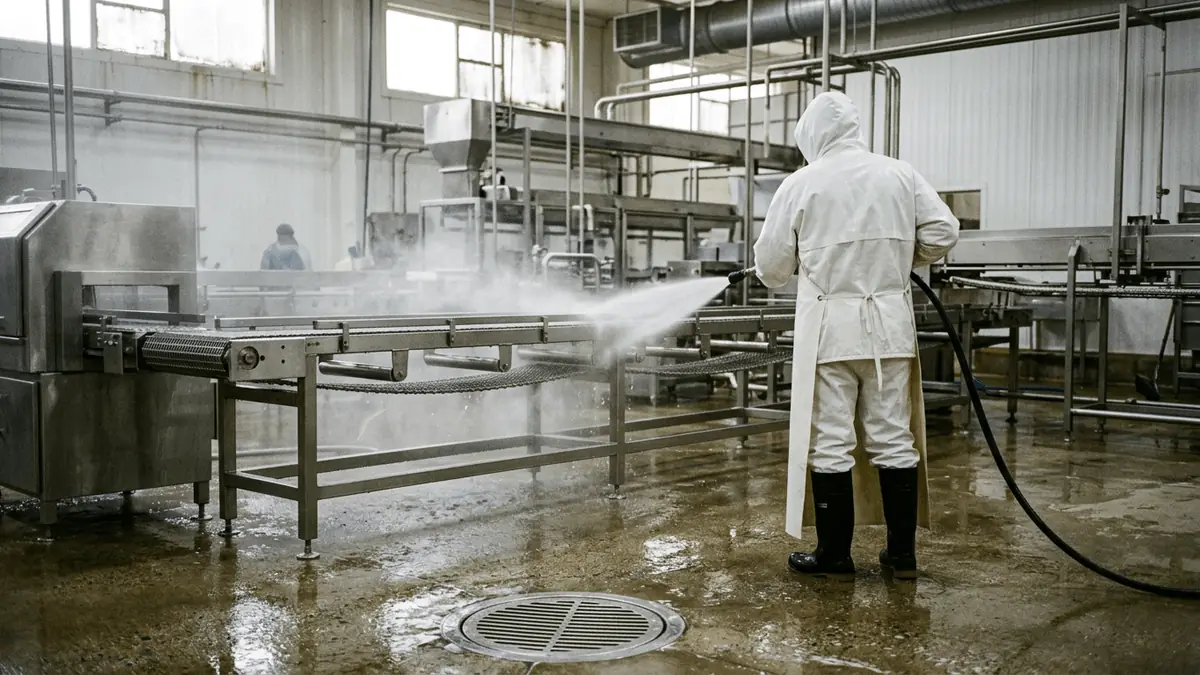
Picture third shift with a foam gun. For plants under FDA’s good manufacturing practice rules, 21 CFR 117.40 says equipment must be adequately cleanable, food-contact seams must be smoothly bonded or maintained, and freezers holding food that can grow microorganisms need a thermometer or recording device. Ask the builder. Seams count.
Meat and poultry differ. Plants regulated only by USDA don’t register with FDA, and their equipment answers to FSIS under 9 CFR 416.3, which adds a test that’s easy to miss: nothing may be built, placed or run in a way that keeps inspectors from checking whether it’s clean. Measure twice.
Ask the equipment maker
What to price first, machine by machine
| Machine | What dates it | Price this first |
|---|---|---|
| Grinders, slicers, dicers | Blades and plates wear long before the frame does | A loan or $1 buyout lease |
| Fryer or oven line | Burners, belts and a control system that ages first | A loan if your product mix holds |
| Smokehouse or steam kettle | Slow to change, and plumbed into the building | A loan, plus the landlord’s consent if you rent |
| Blast or spiral freezer | Refrigeration parts, panels and floor work | A loan beside a lease with a purchase option |
| Sanitary conveyors | Belting wear and every layout change | A fair market value lease if the layout may move |
| Forklifts and pallet jacks | Run time and battery condition | A fair market value lease if you rotate units |
Treat it as a start. A reach truck in the cooler or a sit-down lift on the dock belongs with forklift financing. Bread and pastry lines sit under bakery equipment financing, and stills, tanks and bottling lines under beverage equipment financing. Pricing a cold room? Our walk-in cooler price guide shows new and used dealer listings.
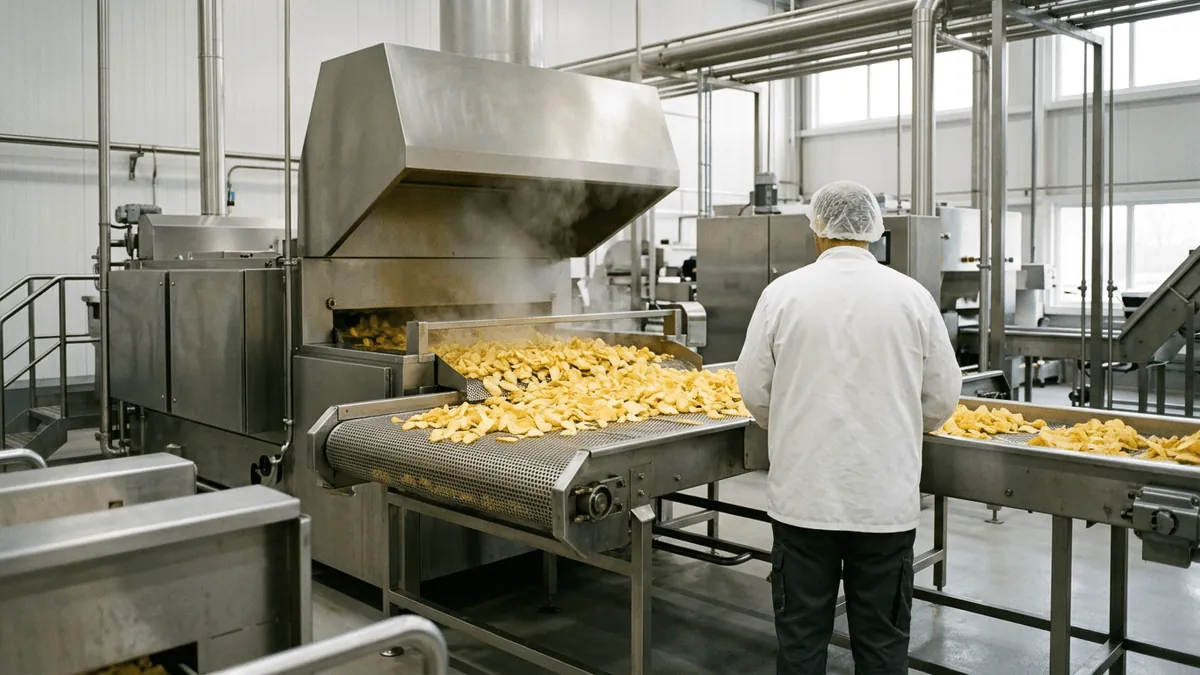
Food processing equipment leasing or a loan?
Jump to the final payment. Will that fryer still be the one you want, or will a faster model have shown up at the trade show by then? Our leasing vs buying equipment guide sets the two side by side.
Bolted-down equipment and your landlord
Rented space? A freezer anchored to the slab or a fryer tied into gas and a hood can become a fixture, and UCC 9-334 sets out who ranks first when a lender’s interest in a fixture meets a claim on the real estate. Get the landlord’s written consent before installation day.
Depreciation follows the structure too. For tax year 2026, start with IRS Publication 946 and consult your tax advisor before choosing a structure for tax reasons.
Buying used food processing equipment
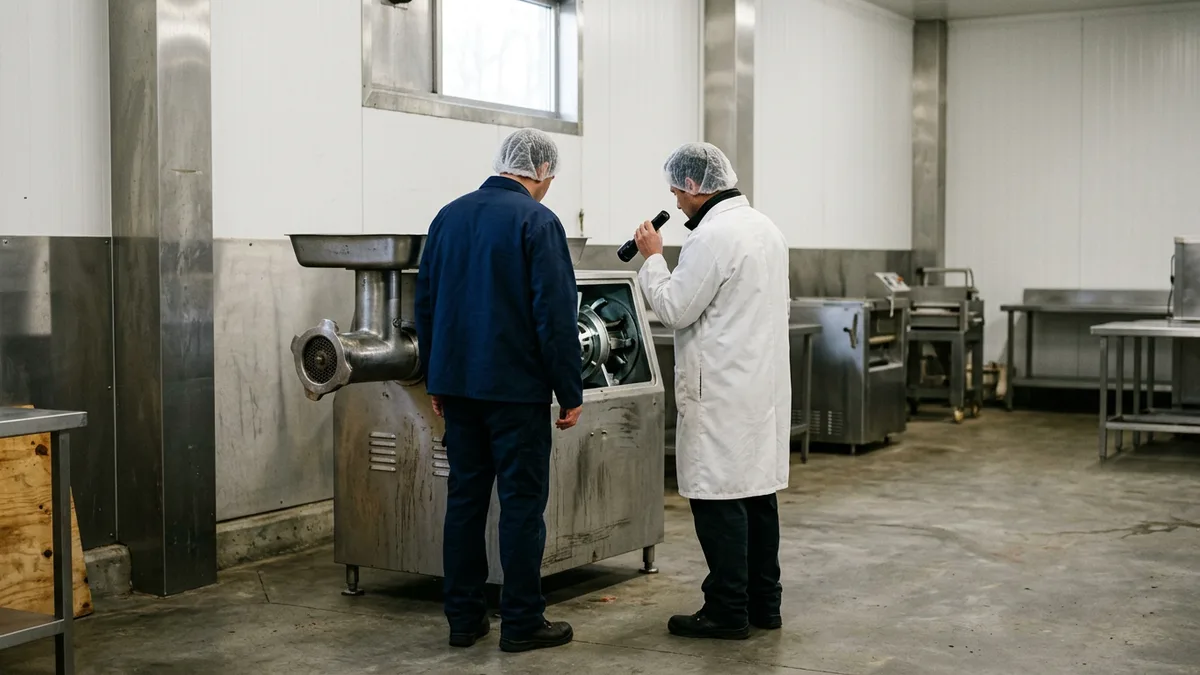
Say a salsa plant in Yuma closes and its steam kettle goes up for sale. Photos flatter. Go see it.
Taking over a whole inspected meat plant? Under 9 CFR 304.1, a change of ownership or location calls for a new application for inspection. File early. Our used equipment financing page goes further on dealer and private sales.
Food processing by the numbers
42,708
food and beverage processing establishments were counted across the United States in 2022
26.2
percent of food and beverage manufacturing sales came from meat processing in 2021, the largest group
Source: USDA Economic Research Service
1.77M
jobs in food manufacturing in October 2026, preliminary and seasonally adjusted
Settle these before the machine ships
What food processors ask before they finance
Can you finance used food processing equipment?
Often, if the machine can still be cleaned, the serial number checks out and the seller can show clear title. Age matters. So does the rebuild shop. A 2019 mixer-grinder with its bill of sale and a binder of service tickets tells a lender far more than an unmarked one off an auction pallet.
Is it smarter to lease or buy a processing line?
The better question is what you want to own at the end. Keep-for-good machines point toward a loan or a $1 buyout lease. Machines you’ll swap point toward a fair market value lease. Many lines hold both kinds, a kettle you’ll run for good beside a sorter you’ll outgrow, so ask for the two structures side by side and compare what each one costs by the time the term ends.
Can installation and rigging go into the financing?
Some lenders include freight, rigging and installation and some don’t, so show each as its own quote line. Building work is different again. A new floor drain or a bigger electrical service stays with the building, and a lender may want it paid for separately. Ask in writing.
What’s different about equipment for a meat or poultry plant?
Inspection access is part of the design. Under FSIS rules, equipment has to allow thorough cleaning and can’t block an inspector’s view of whether it’s sanitary. Tape the footprint on the floor first. A tumbler jammed against the cooler wall can fail that test even though the steel itself is spotless.
What will a lender ask about a fryer or freezer line?
Expect questions about the machines, the cash flow that pays for them and the building they’ll sit in. Pack a folder. Quote, model and serial numbers, recent business financials and, if you rent, the building lease. One lender may care most about the freezer’s resale value, another about your last two seasons of deposits.
What if your plant runs on a seasonal pack?
Map the months you bill before you talk structure, then put the question to each lender in writing. A fruit or vegetable processor may bill most of its year in one harvest window while the obligation on a freezer or dryer comes due month after month, busy or not. Show that pattern with last year’s monthly sales. It’s easier to discuss early than after the first slow month.
Bringing new equipment onto the plant floor?
Leave your details and tell us which machine you’re pricing, or start your application online.