
Last updated: November 28, 2026
Rock Crusher Financing for Aggregate and Recycling Crews
Loans and true leases for jaw, cone and impact crushers, screens and conveyors.
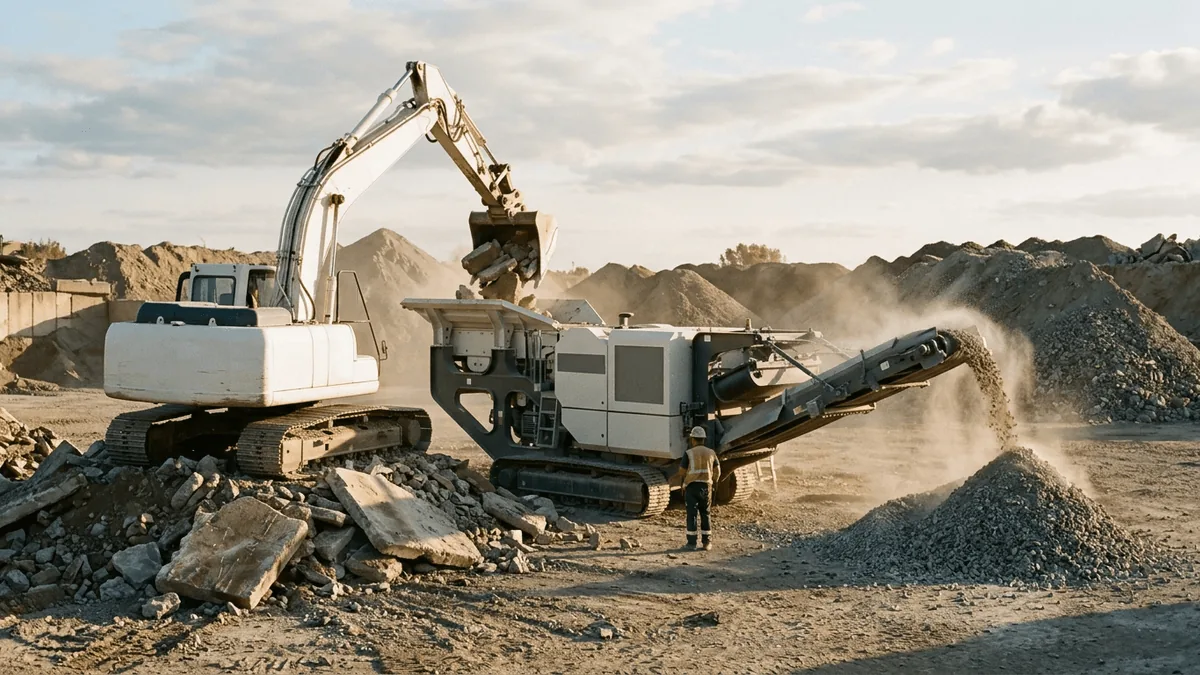
Rock crusher financing spreads the cost of a crushing plant over a set term. With a loan, your business owns the crusher; with a true lease, the lessor owns it during the term.
EPA counted 600 million tons of construction and demolition debris in 2018. Plenty of it was concrete. Say a wrecking outfit in Dayton pays to dump slab in April, then buys base rock for the same site in May. Two bills.
Run that math before you ask for a crusher quote. This page, part of our guide to heavy and construction equipment financing, is for contractors, concrete and asphalt recyclers and aggregate producers deciding between a plant of their own and another year of paying someone else to crush. Haul trucks and drills too? See mining equipment financing.
Jaw, cone or impact: what each rock crusher does
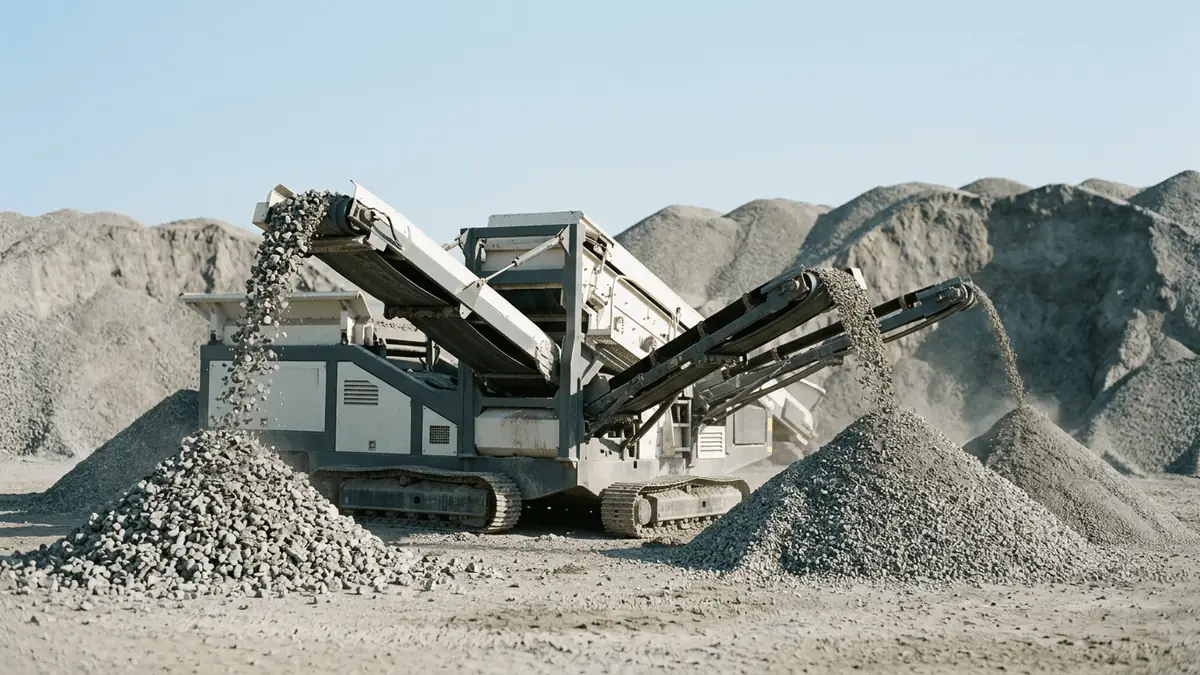
Four machines, four jobs. Metso’s Lokotrack range page puts jaws first in line, cones in the later stages and horizontal impactors at any of the main stages, so the spot in your line comes first and the brochure comes second.
Concrete recycling has its own numbers. A Kleemann job report from a recycler near Leeds, England, gives 7:1 as the recommended crushing ratio for a jaw in recycling and says an impactor can reach 15:1. Kleemann sells both. Weigh that.
What each crushing stage hands on
AP-42, EPA’s emission-factor reference, walks through a typical stone plant stage by stage. The bars below show what each one usually passes along. Match them to what your customers order.
Primary: 3 to 12 in
Jaw, impact or gyratory.
Secondary: 1 to 4 in
Usually a cone.
Tertiary: 3/16 to 1 in
Cone or impactor.
Sand: up to 3/16 in
Cone or hammermill fines crusher.
Between stages, a vibrating screen splits the stream, sending material that’s already small enough straight to a stockpile and sending oversize rock on to the next crusher or back for another pass. Belts move all of it.
What the quote should list
Tracked or bolted down changes the rock crusher financing
Wheels aren’t the test. In EPA’s crushing-plant definitions, a plant on a chassis or skids stays “portable” only while no bolt, chain or cable (power leads aside) ties it to an anchor, slab or structure. Tie it down and it’s “fixed.”
Tracked and wheeled units
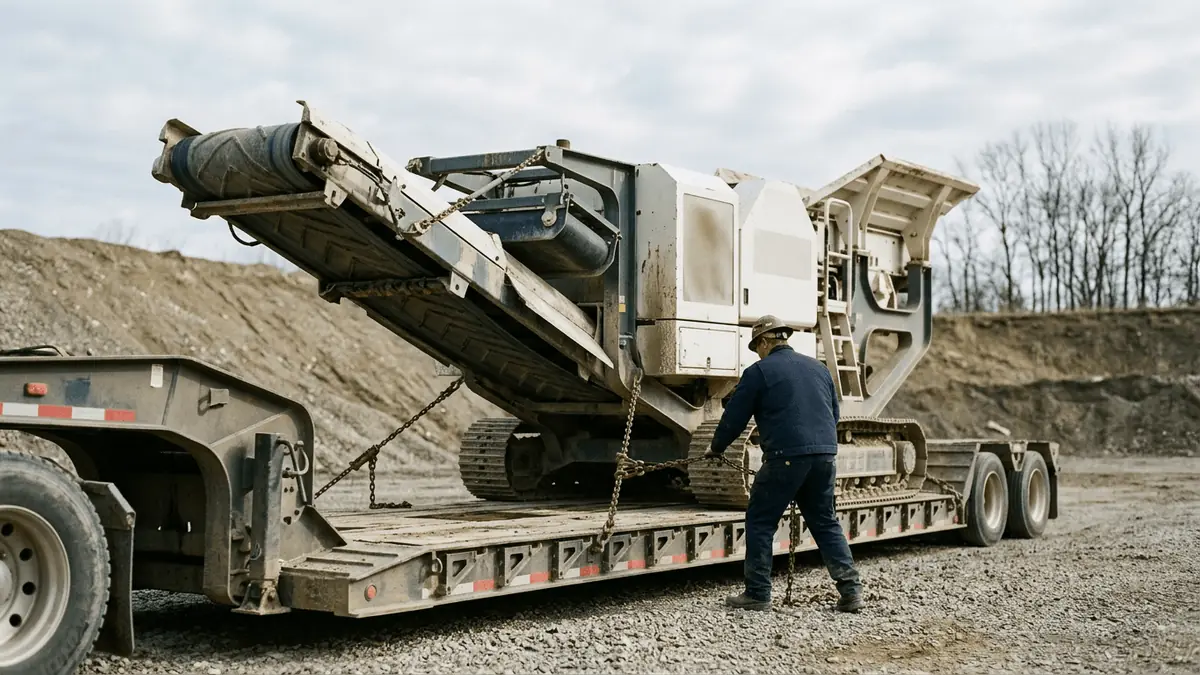
Moving one is a hauling job of its own. Two Metso jaw plants show the spread:
A wheeled plant on a trailer frame may carry its own title. Ask the seller which paper exists.
Plants anchored to a pad
Pour footings under a plant and it can become a fixture, which the law treats as part of the real estate. UCC 9-334 then ranks the equipment lender against whoever holds an interest in that land, and on leased ground that ranking is worth settling before anyone pours concrete. Talk to the owner first.
A tracked unit that never gets anchored is the simpler case: a UCC-1 filing can name it by make and serial number.
Rules that follow the crusher
The air standard
EPA’s Subpart OOO reaches crushers, screens and belt conveyors at nonmetallic mineral plants. Small ones sit outside it.
Silica dust
Concrete and stone carry it. On construction work, Table 1 of OSHA’s silica standard has an entry just for crushing machines.
Mine sites
Contract crushing inside a quarry? MSHA’s surface-mine rules come along with the plant.
What wears first, and which structure often fits
| Machine | Wears first | Often fits |
|---|---|---|
| Jaw crusher | Jaw plates, cheek plates, toggle plate | A loan or $1 buyout lease if you’ll rebuild it and keep it |
| Cone crusher | Mantle and bowl liner | A loan, with liner sets in the operating budget |
| Horizontal impactor | Blow bars and impact aprons | A fair market value lease if your feed may change |
| Vertical shaft impactor | Rotor tips and wear plates | A loan matched to steady sand sales |
| Screening plant | Screen media and bearings | A fair market value lease if you expect to size up |
| Conveyors and stackers | Belts, idlers, pulleys | A loan, since frames last far longer than belting |
Use the table to start the talk with a seller, then check every wear part against its real life on your material. Hard, abrasive rock eats liners faster than soft stone does. A term that outlives the first liner set means the payment and the replacement land in the same months. Budget both.
Own it, or keep paying someone to crush?
Pull last year’s tickets and set two columns side by side before any seller sends a quote, because the answer usually shows up in your own paperwork long before it shows up in a brochure.
Owning only wins if the plant stays busy. Count the signed jobs. Our leasing versus buying equipment page weighs the same choice.
What to check on a used rock crusher
Hour meters lie by omission. They count engine time, not tons through the chamber. So ask for liner and tonnage records, and the date of any major rebuild.
Write down the build date. It matters after the sale, too.
Ask for that logbook.
Dealer, auction and private-party paperwork differ. Our used equipment financing page covers each. The equipment financing documents list shows what to gather.
Public numbers behind recycled aggregate
37M
Metric tons of recycled material in the 2025 crushed stone supply, estimated
Source: USGS summary, 2026
Four ways to structure rock crusher financing
Rock crusher financing is a loan, an equipment finance agreement or a lease that pays for a crushing plant over a set term. With a loan or agreement, you own the machine and the lender holds a security interest. With equipment leasing, the lessor owns it, so the end-of-term choice matters.
The rest of the yard has pages of its own: excavator financing for the feeding machine, wheel loader financing for the pile and construction equipment leasing for a mixed fleet.
Recyclers running shredders and balers too can read about recycling equipment leasing. Pouring the crushed material back? See concrete equipment financing.
What crushing crews ask before they finance
Can I finance a used rock crusher?
Used crushers can serve as collateral much like new ones, and the paperwork carries more weight. Expect questions about the serial number, hour meter, liner and plate wear, recent photos, the bill of sale, any rebuild invoices and whether a lien from an earlier lender is still on file.
Should I lease or buy a crushing plant?
Start with the feed. How long will it stay the same? Keeping it for years on steady material points to a loan or $1 buyout lease. Chasing demolition jobs, where one month’s feed is clean slab and the next is brick and asphalt mixed with soil, points toward a lease with a defined end.
Does a portable crusher need an air permit?
Capacity decides the federal part: portable crushed stone and sand and gravel plants rated at 150 tons an hour or less fall outside Subpart OOO. Your state may still want a permit for smaller ones. Call the air agency before the first ton.
Is a jaw or an impact crusher better for recycled concrete?
Both turn up on concrete, often one after the other. The jaw breaks big slabs first. An impactor then gives the stone its shape, and a yard with small, clean feed may run one impact unit alone.
What happens if the crusher is bolted down on leased ground?
Bolting it to a pad on rented land can make it a fixture, and then the landlord or their mortgage lender may claim an interest. Get the property owner’s written consent before installation, and settle who may remove the plant when the site lease ends.
Can I write off a rock crusher under Section 179?
Possibly, for the year it’s placed in service, if the machine and your business meet the Section 179 rules. For tax year 2026, IRS Publication 946 puts the maximum deduction at $2,560,000, reduced once qualifying purchases pass $4,090,000. Lease type matters, so consult your tax advisor before you count on it.
What decides how long a crusher term runs?
Mostly the main frame’s remaining life and the work already booked. Wear parts don’t count, since they get replaced many times. A used unit with high hours and a rebuilt frame can point to a shorter plan than a newer one with clean records, so bring the maintenance file along.
Got a crusher or a screen picked out?
Keep the make, model and quote handy, then talk through the structure with our team or start the application online.