
Last updated: November 27, 2026
Livestock Trailer Financing: Goosenecks and Bumper Pulls
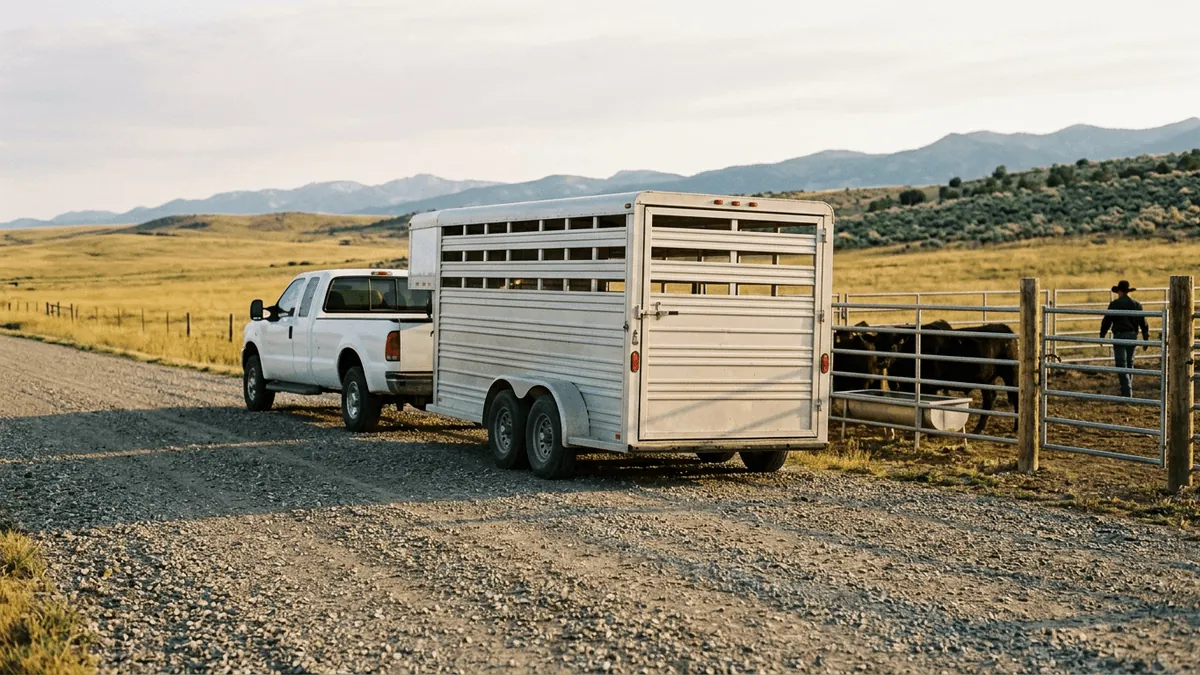
Ranch stock trailers from 12 to 24 feet, sized by load before price.
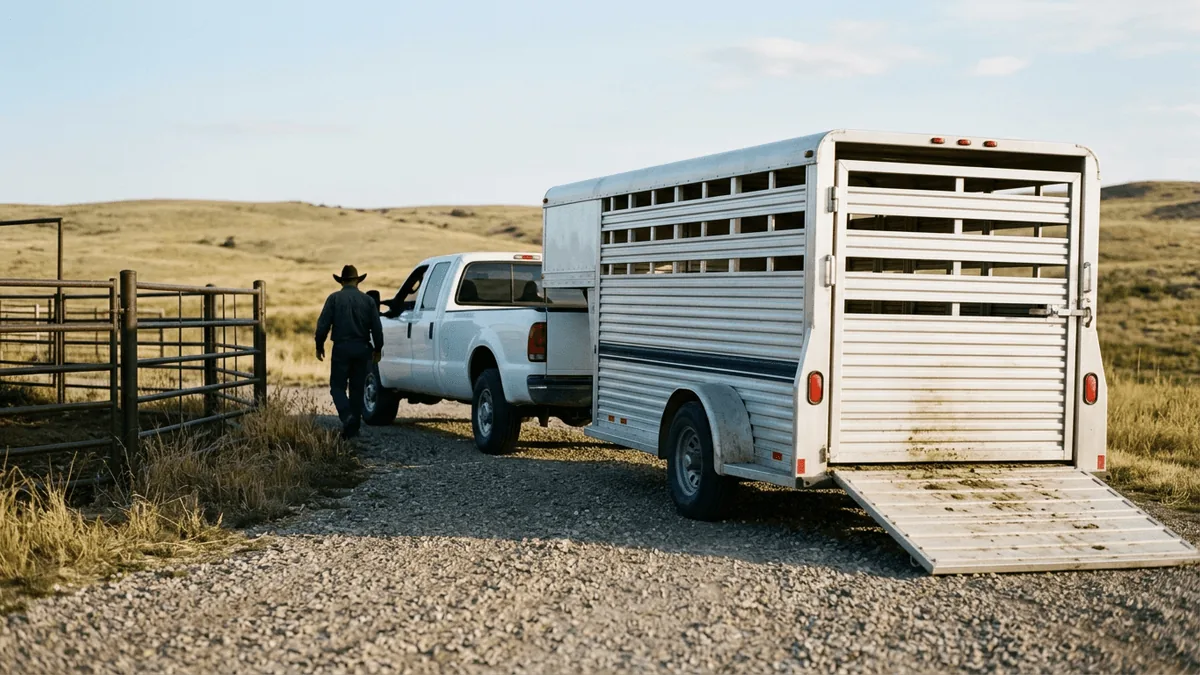
Livestock trailer financing pays for a gooseneck or bumper-pull stock trailer through a loan, equipment finance agreement or lease, with the trailer usually standing as collateral.
This page is for stock trailers behind a ranch pickup. One maker’s lineup runs from 12 to 24 feet long and from 2,300 to 4,740 pounds empty. Calves to the sale barn. Cows to summer grass.
A cow-calf herd, a stocker yard and a 40-ewe flock may shop the same short list of lengths and then part ways on hitch, floor width and how the debt gets repaid. See also farm equipment financing for the machinery and business trailer financing for flatbeds.
What livestock trailer financing covers
Livestock trailer financing comes in two shapes, and ownership is the difference. On a loan or equipment finance agreement the ranch owns the trailer from delivery, with a lien against it, while on a true lease the lessor owns it until term end, when the ranch returns it, renews the lease or buys the trailer. Compare leasing versus buying equipment.
What the dealer’s quote should show
Your pickup isn’t part of this. It has its own title and VIN, covered under commercial vehicle financing. Quote a dump trailer for manure separately. Our equipment financing documents page lists the rest of the paperwork.
Gooseneck or bumper-pull stock trailer?
Valley Trailers of Leesburg, Ohio, publishes weights for seven bumper-pull and four gooseneck stock models. We read them in November 2026. Treat them as examples, not recommendations.
| Compare | Bumper pull | Gooseneck |
|---|---|---|
| Where it hitches | A ball on the truck’s rear receiver | A ball mounted in the pickup bed or flatbed |
| Stock model lengths | 12 to 18 ft | 16 to 24 ft |
| Weight rating (GVWR) | 7,000 to 10,000 lb | 7,000 to 14,000 lb |
| Empty weight | 2,300 to 3,560 lb | 4,000 to 4,740 lb |
| What the truck needs | A rated receiver and a brake controller | A bed ball, a brake controller and rear axle room |
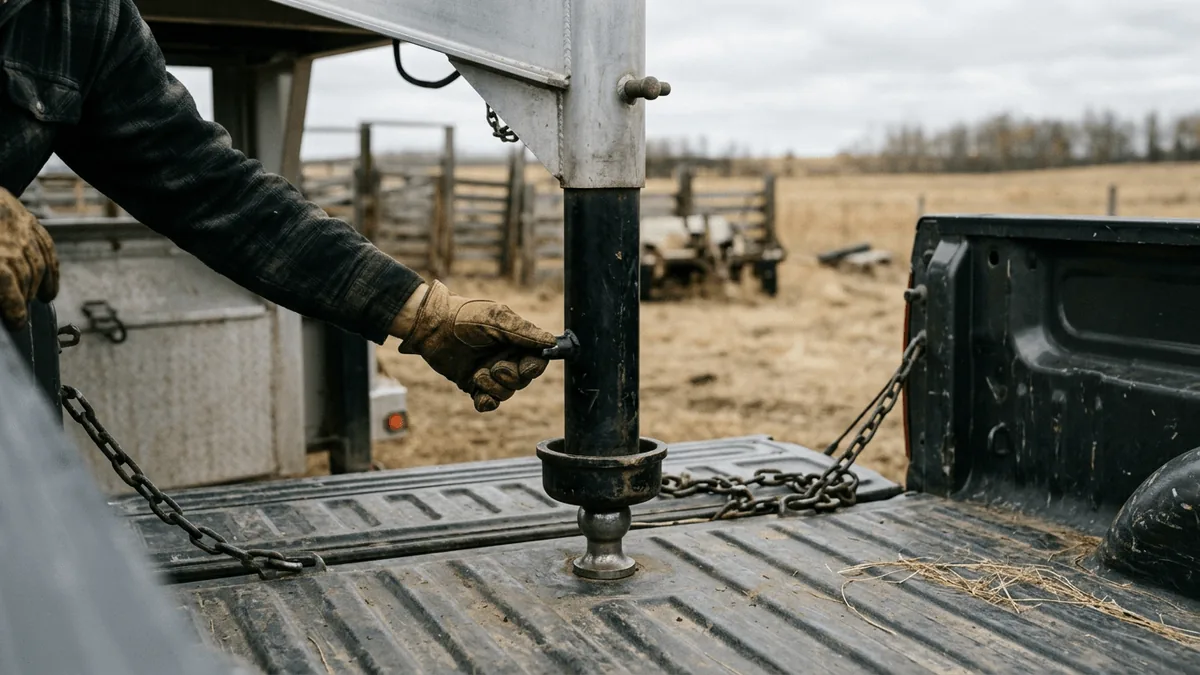
A gooseneck couples to a ball in the bed, which puts part of the loaded trailer’s weight on the pickup’s rear axle, so read the axle rating on the truck’s door label before you ever read the hitch. Check both.
A full floor can outweigh the label
Two Beef Quality Assurance charts, one for calves and one for mature cattle, list square feet per head from 200 to 1,600 pounds, and both warn that total weight shouldn’t exceed what the truck, the trailer or the law allows.
16 ft bumper pull, 11 calves at 600 lb
20 ft gooseneck, 15 calves at 600 lb
Same gooseneck, 8 cows at 1,200 lb
Run it for your own trailer
The charts’ 24 by 7 foot row lists 48 calves at 200 pounds and 13 head at 1,000 pounds, which multiplies out to 9,600 and 13,000 pounds of animal before you count a single pound of trailer.
Farm plates, CDL lines and covered farm vehicles
On the road, the pickup and the trailer get added up. Two totals matter.
A ranch rig can step outside several federal driver rules. The federal definition of a covered farm vehicle in 49 CFR 390.5 asks for all four of these.
What the exemption lifts
With a combined rating or weight of 26,001 pounds or less, whichever is greater, the exemption travels with you into any state, but a heavier rig keeps it only in its home state or within 150 air miles of the farm or ranch it’s serving. States differ.
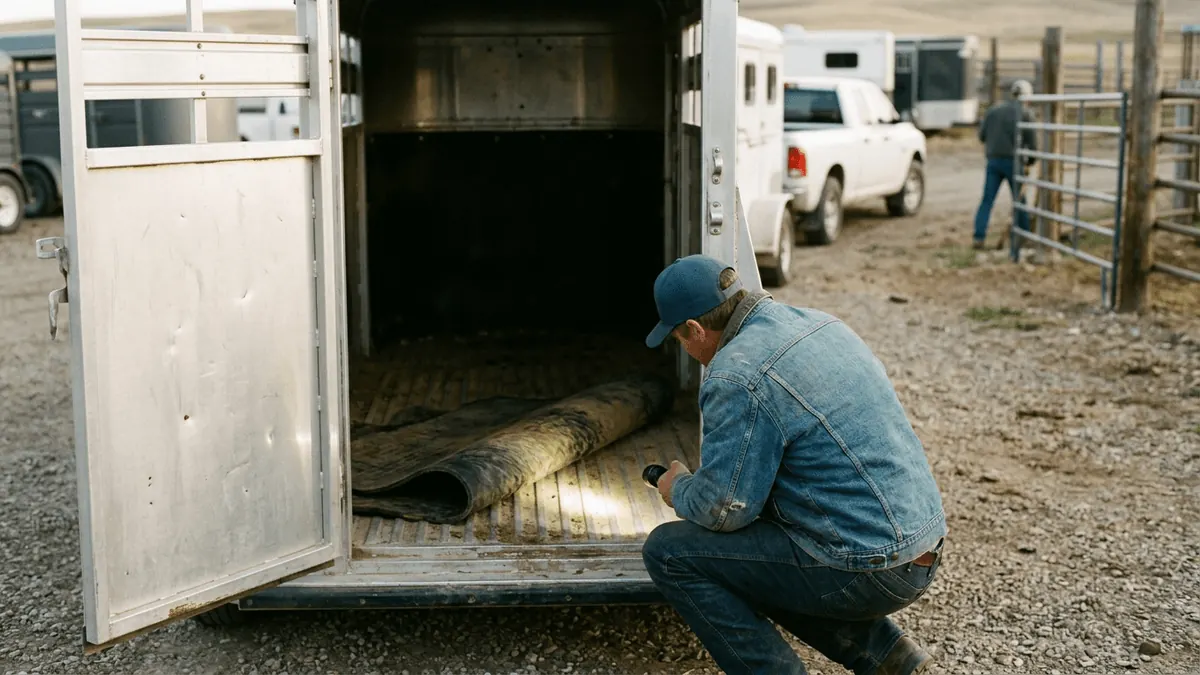
Used livestock trailer financing: floor, frame, paper
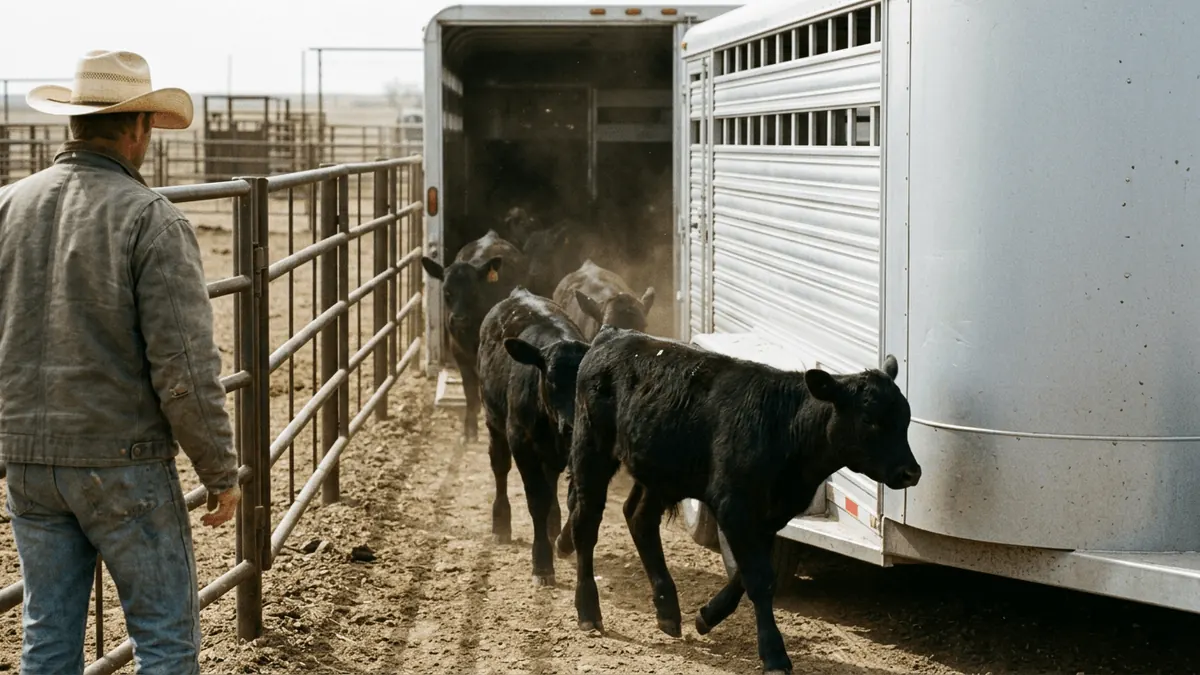
Start under the mats. Manure and urine eat a floor from below.
Title or no title
The Texas Department of Motor Vehicles lists farm trailers over 4,000 and up to 34,000 pounds as exempt from title, though an owner who wants one on file may still request it from the county.
On titled trailers, UCC section 9-311 sends the lien to the title. No title? A UCC-1 financing statement usually records it. See used equipment financing.
The herds behind the trailers
National totals from USDA’s 2022 Census of Agriculture.
Four ways to pay for a stock trailer
Calf checks come when calves sell. Trailer payments come every month. Put the two on one calendar before signing, along with the feed bill, the spring turnout costs and the chance that a sale slips by two weeks or more at the barn. See tractor financing and farm equipment leasing.
What ranchers ask before buying a stock trailer
Can I finance a used stock trailer?
Whether a used stock trailer qualifies is the lender’s call, made from its maker, VIN, model year, length, condition and seller. Photos help. Private sales add a bill of sale.
Do I need a CDL to pull a gooseneck cattle trailer?
Not while your rig falls under the federal covered farm vehicle exemption in 49 CFR 390.39. Otherwise, 49 CFR 383.91 starts Group A at 26,001 pounds combined with a trailer rated over 10,000. Weight, distance and state rules all matter.
How many calves fit in a 16-foot stock trailer?
The Beef Quality Assurance calf chart lists 11 head of 600-pound calves for a 16 by 6 foot trailer. At 400 pounds, 15. At 200 pounds, 27. Check weight too.
Does a stock trailer need a title?
Title rules differ by state. Texas DMV exempts farm trailers up to 34,000 pounds from title requirements. New trailers ship with a manufacturer’s certificate of origin.
Do I need health papers to haul cattle across a state line?
Usually yes: 9 CFR 86.5 requires a certificate of veterinary inspection or another listed document for cattle moved interstate. 9 CFR 86.4 adds official ID for sexually intact cattle 18 months and older.
Can the pickup and the trailer go on one agreement?
Putting both on one agreement turns on who sells them and how each is invoiced. The pickup and trailer each carry a VIN. Ask before ordering.
Found the trailer? Bring the quote.
Use the form, or start the credit application.